Exterior paint does more than improve a house’s appearance. It helps protect timber, masonry, and other building materials from the elements. When the coating begins to peel, crack or blister, simply applying another layer of paint may not solve the problem.
The best way to remove exterior house paint depends on the surface underneath, the condition of the existing coating and the reason it has deteriorated. Some walls need only minor paint removal and preparation, while others require more extensive treatment. For homeowners in Adelaide, understanding these differences can help prevent unnecessary work and prepare the property for a durable new finish.
When Should You Remove Old Exterior House Paint?
Before choosing a paint removal technique, examine the existing coating carefully. The condition of the paint helps determine whether you need complete removal or targeted preparation. Peeling paint is one of the clearest signs that the coating has lost adhesion. Blistering may indicate trapped moisture, excessive heat, or an underlying adhesion problem. Deep cracking can expose the material underneath to further weather damage.
However, faded or chalky paint does not always need to be stripped completely. If the coating remains firmly attached, suitable cleaning, surface preparation, and a compatible primer may be enough. The important step is identifying why the paint has failed. Damaged timber, leaking gutters, cracked render, and moisture entering through exterior walls should be addressed before repainting. Otherwise, the same problems may affect the new coating.
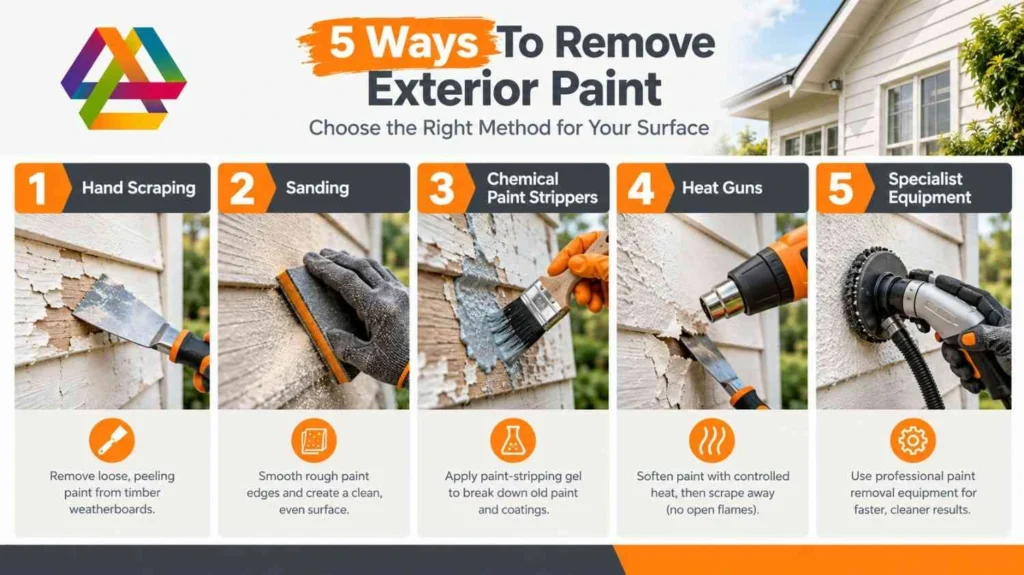
5 Ways To Remove Exterior Paint
Different paint removal methods suit different surfaces and paint conditions. Choosing the right technique helps prevent damage and makes preparation more efficient.
1. Hand Scraping For Peeling Paint
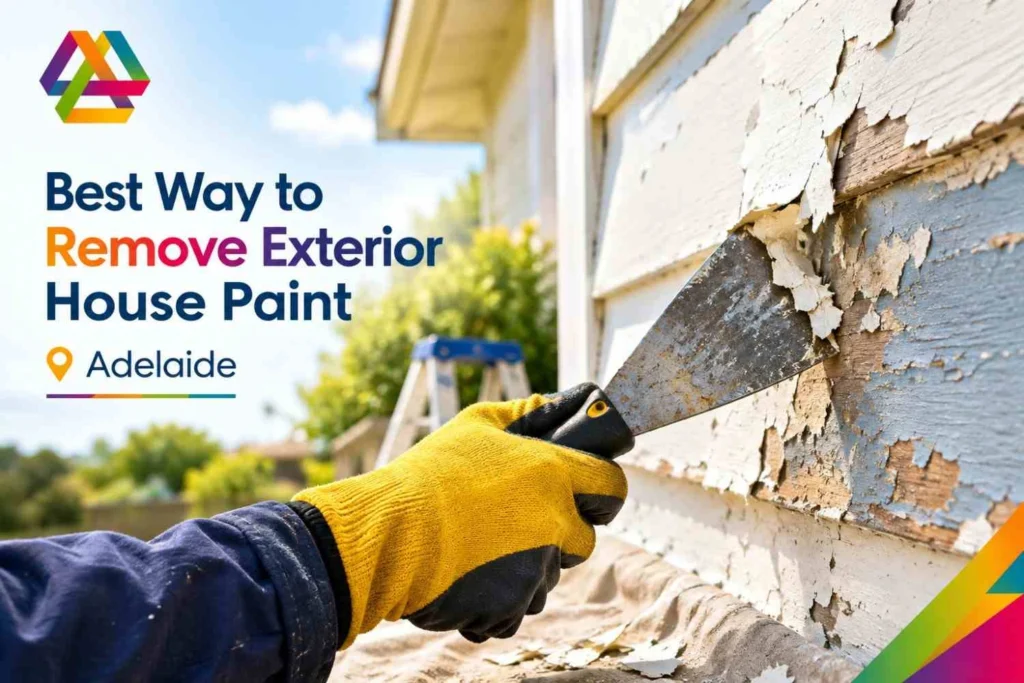
Hand scraping removes loose paint from timber weatherboards, window frames and fascia boards. Use a suitable scraper carefully to lift flaking paint without gouging the surface. Smooth the remaining edges before priming. For older coatings, assess the risk of lead before starting.
2. Sanding To Smooth Paint Edges
Sanding smooths rough edges and prepares suitable surfaces for repainting. Hand sanding offers better control on detailed areas, while power sanding can speed up larger jobs when appropriate dust extraction is used. Avoid uncontrolled sanding if lead-based paint is suspected.
3. Chemical Paint Strippers For Stubborn Coatings
Chemical strippers soften compatible paint, making it easier to remove from detailed timber and decorative surfaces. Choose a product suitable for the material and follow its application, ventilation, protective equipment, and cleanup instructions. Chemical stripping also requires careful handling and is not automatically safe for lead paint.
4. Heat Guns For Suitable Paint
Heat guns can soften certain coatings for easier scraping. However, excessive heat may scorch timber, damage surrounding materials, or release harmful fumes. Avoid open-flame methods and seek professional advice if lead-based paint may be present.
5. Specialist Paint Removal Equipment
Specialist equipment can help with extensive or stubborn coatings. However, abrasive blasting and high-pressure methods may damage brickwork, render, or timber. For large projects or hazardous paint, professional assessment can help determine the safest removal method.
How To Remove Exterior House Paint Step By Step
A successful paint removal project involves more than stripping away the old coating. The surface must also be clean, stable, and suitable for repainting.
Step 1: Inspect the exterior. Identify peeling paint, cracks, blistering, damp patches, and damaged materials. Consider the age of the building and whether lead-based paint may be present.
Step 2: Protect the surrounding area. Move outdoor furniture and protect windows, plants, paths, and nearby surfaces. Contain paint chips and dust rather than allowing debris to spread into gardens or drainage systems.
Step 3: Select the appropriate method. Choose scraping, sanding, chemical stripping, or a specialist technique according to the coating, substrate, and safety risks.
Step 4: Remove unstable paint. Work carefully and avoid damaging the surface underneath. If you uncover suspected lead paint or unexpected deterioration, stop and seek appropriate advice.
Step 5: Repair and clean. Address damaged timber, cracks, and other defects using suitable repair materials. Remove dust and residues using a method compatible with the surface, then allow it to dry thoroughly.
Step 6: Prepare for the new coating. Smooth remaining paint edges where appropriate and apply a compatible primer to exposed or repaired areas as required. Follow the coating manufacturer’s instructions before applying exterior paint.
The Best Paint Removal Method For Different Surfaces
The material beneath the paint should guide your decision.
- Timber weatherboards: Controlled scraping and suitable sanding can work well on sound timber. Check for rot, splitting, and moisture damage before repainting.
- Brick walls: Use a compatible, controlled removal method that does not damage the brick face or mortar joints.
- Rendered surfaces: Avoid aggressive scraping that can gouge the render. Repair cracks and investigate moisture problems before applying a new coating.
- Metal surfaces: Remove failing paint using an appropriate method, treat corrosion where necessary, and apply a compatible primer.
If a surface has been painted repeatedly, test the proposed method on a small, suitable area before proceeding with a larger section. This helps reveal potential damage or compatibility issues.
Important Safety Advice For Australian Homes
Older Australian homes may contain lead-based paint, particularly properties built before the mid-1970s. Newer paint layers do not guarantee that older coatings underneath are lead-free.
If you suspect lead, arrange appropriate testing before starting removal. Confirmed lead-based paint requires careful risk management, suitable containment, and appropriate waste handling. Professional assistance is strongly advisable when significant removal is required. For other paint removal work, use protective equipment appropriate to the hazards, follow product instructions, and control dust and debris. Chemical products require particular care around ventilation, skin contact, and ignition sources.
Also consider weather conditions before starting an exterior project. Adelaide’s strong sunlight and changing temperatures can affect preparation and repainting schedules. Follow the paint manufacturer’s guidance on surface temperature, drying conditions, and recoat times.
Common Mistakes That Lead To Poor Painting Results
Several preparation errors can undermine an otherwise good paint job.
- Removing sound paint unnecessarily increases labour and waste.
- Painting over unstable coatings leaves a weak foundation for the new finish.
- Ignoring moisture or damaged timber allows the underlying problem to continue.
- Using incompatible chemicals or excessive mechanical force can damage the surface.
- Applying primer or paint over dust, residues, or damp materials can affect adhesion.
Careful inspection and appropriate preparation are often more valuable than choosing the most aggressive removal method.
Should You Hire Professional Exterior Painters in Adelaide?
DIY paint removal may be suitable for small areas that are accessible and safe to work on. Larger projects can involve extensive preparation, repairs, difficult access, and hazardous coatings.
Professional exterior painters can assess the condition of the existing paint, identify areas that need attention, and determine whether complete stripping is necessary. This helps homeowners avoid unnecessary work while preparing the property for a suitable exterior paint system. For older homes, extensive peeling, or multi-storey properties, professional advice can also help manage risks that are difficult to address with basic household equipment.