Planning a painting project involves more than choosing an attractive colour. You also need to know how much paint to buy to complete the job properly without overspending or running out halfway through. Buying too little can delay your project, while purchasing too much leaves you with unnecessary expenses and leftover tins. Whether you are refreshing a bedroom, repainting a rendered exterior wall or giving your entire home a new look, calculating your paint requirements beforehand makes budgeting easier. This guide explains how to measure surfaces, calculate paint quantities, choose suitable products and avoid common mistakes when buying paint.
1. Measure The Area You Need To Paint
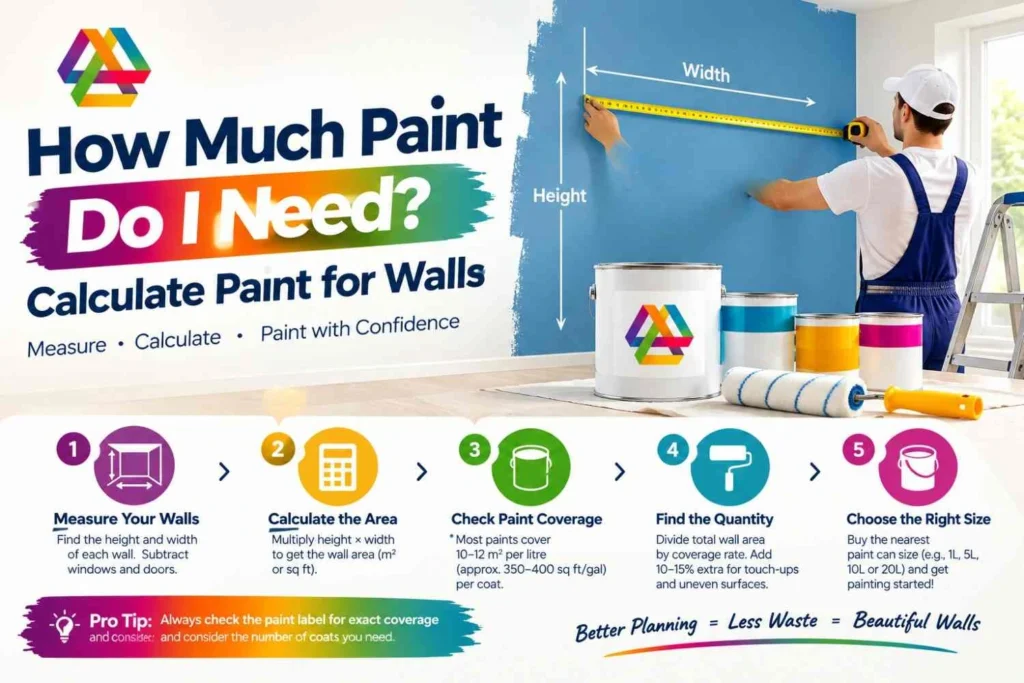
Start by measuring the height and width of every wall you intend to paint. Multiply these measurements to calculate the area of each wall, then add the results together.
Wall area = Height × Width
For example, a wall measuring 4 metres wide and 2.7 metres high has an area of 10.8 square metres.
Measure all four walls separately, including walls of different sizes. If you are painting the ceiling, calculate its area separately using its length and width.
Should You Subtract Windows And Doors?
Yes. Large windows and doors can reduce the total paintable area, so subtract their measurements from the combined wall area. For example, if your walls total 45 square metres and the windows and doors cover 5 square metres, your estimated paintable area is 40 square metres. Small openings can be left in the calculation if you prefer a simpler estimate. However, remember that edges, corners and uneven surfaces can affect the amount of paint required.
2. Check How Much Coverage The Paint Provides
Every paint product has a recommended coverage rate, usually expressed in square metres per litre (m²/L). You can find this information on the product label or in the manufacturer’s technical data sheet. Coverage varies depending on the paint formulation, application method and surface condition. Smooth, previously painted walls may require less paint than bare plaster, rough render or porous masonry.
For example, if a product covers 12 square metres per litre, one litre should theoretically cover 12 square metres with one coat under suitable conditions. Always check the specific product’s instructions rather than assuming all paints provide the same coverage.
3. Calculate The Total Paint Quantity
Once you know the paintable area and coverage rate, use this formula:
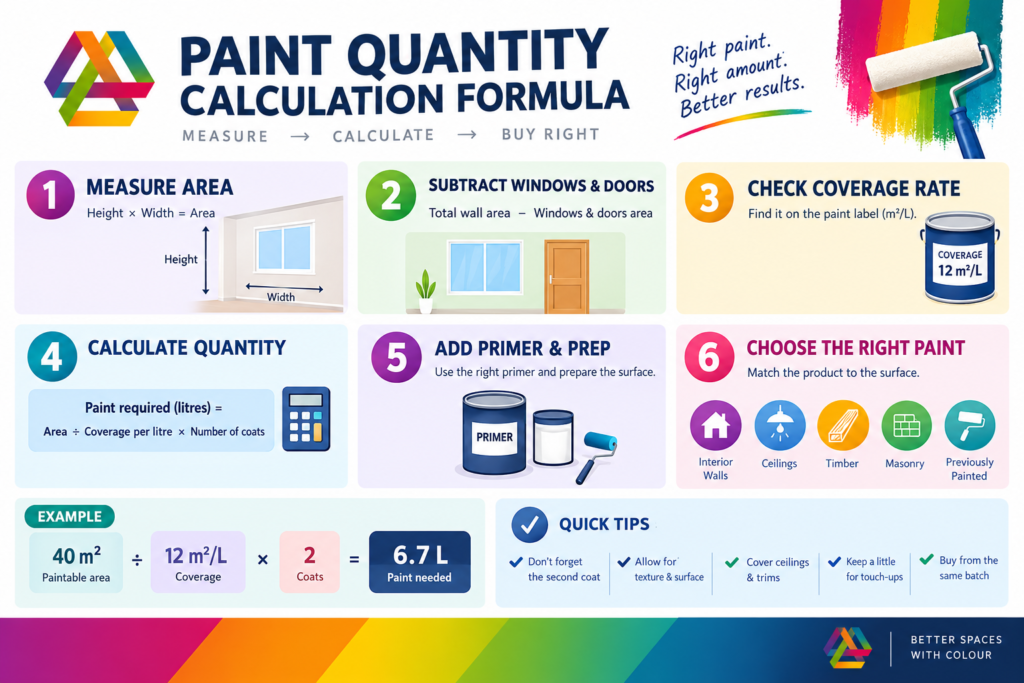
Paint required (litres) = Area ÷ Coverage per litre × Number of coats
Consider a room with 40 square metres of paintable wall area. Your chosen paint covers 12 square metres per litre, and the manufacturer recommends two coats.
The calculation is:
40 ÷ 12 × 2 = 6.67 litres
You will need approximately 6.7 litres for the two coats. Allow for additional paint where necessary, particularly if the surface is rough, absorbent or requires extra coverage. This calculation estimates the topcoat only. Primer, sealer and undercoat requirements should be calculated separately.
4. Account For Primer And Surface Preparation
One of the most common painting mistakes is buying the topcoat without considering the preparation products required underneath it. Bare timber, new plaster, repaired sections and some masonry surfaces may need a suitable primer or sealer. These products help prepare the substrate and support adhesion when used according to the manufacturer’s instructions.
Previously painted walls in good condition may not require a full primer coat, provided the existing finish is compatible with the new paint. Before purchasing, inspect the surface for peeling paint, cracks, chalking, mould and moisture damage. These issues may require cleaning, repairs or specialist assessment before painting begins.
5. Choose Paint According To The Surface
The type of surface you are painting affects both the product selection and the quantity required.
- Interior walls: Choose a suitable interior wall paint based on the room’s use, desired finish and cleaning requirements.
- Ceilings: Use a product formulated for ceilings where appropriate, allowing for the surface’s texture and absorbency.
- Timber: Check whether the timber requires a primer, undercoat or specialised coating.
- Rendered walls and masonry: Select a compatible exterior coating and follow the manufacturer’s preparation instructions.
- Previously painted surfaces: Check adhesion and compatibility before applying another coat.
For Adelaide properties, exterior paint should also be suitable for strong sunlight, hot summers and seasonal rainfall. Established Australian brands such as Dulux, Wattyl and Taubmans offer different interior and exterior products. Compare the individual product’s coverage, recommended coats, surface suitability and application conditions rather than choosing by brand name alone.
6. Remember These Common Paint-Buying Mistakes
A little planning can prevent unnecessary purchases and frustrating delays.
- Forgetting the second coat: Calculate the quantity for every coat, not just the first.
- Ignoring surface texture: Rough or porous materials may consume more paint.
- Leaving out ceilings and trims: Measure each surface separately and calculate different products independently.
- Buying too little for touch-ups: Keep a small amount of correctly labelled leftover paint where practical.
- Ignoring colour consistency: Where possible, purchase enough paint from the same batch to complete the project.
- Choosing solely by price: Consider coverage, durability, preparation requirements and suitability for the surface.
Do not automatically buy an entire extra tin without checking your calculations. Estimate the likely additional requirement first, then choose a practical container size.
7. When Should You Contact Professional Painters?
For a straightforward bedroom, measuring the walls and checking the paint coverage rate may be enough to estimate your needs. Larger projects involving high ceilings, textured walls, extensive exterior surfaces or significant repairs can be more complicated.
Professional House Painters Adelaide homeowners engage can assess the surface condition, identify preparation requirements and estimate the paint needed for each stage of the project. When comparing quotes, ask whether the price includes paint, primer, preparation, the number of coats and any necessary repairs. This helps you understand the full project cost rather than comparing labour prices alone.
Buy The Right Amount Of Paint For Your Project
Calculating how much paint to buy starts with accurate measurements, the correct coverage rate and a realistic estimate of the number of coats. Remember to account for primer, surface condition and touch-ups before purchasing your materials. If you are planning to repaint your home, Aussie Painters SA can help you understand your painting requirements and explore suitable options for your property. Contact us for professional advice or a quote for painting services in Adelaide, whether you are updating interior rooms or refreshing your home’s exterior painting.