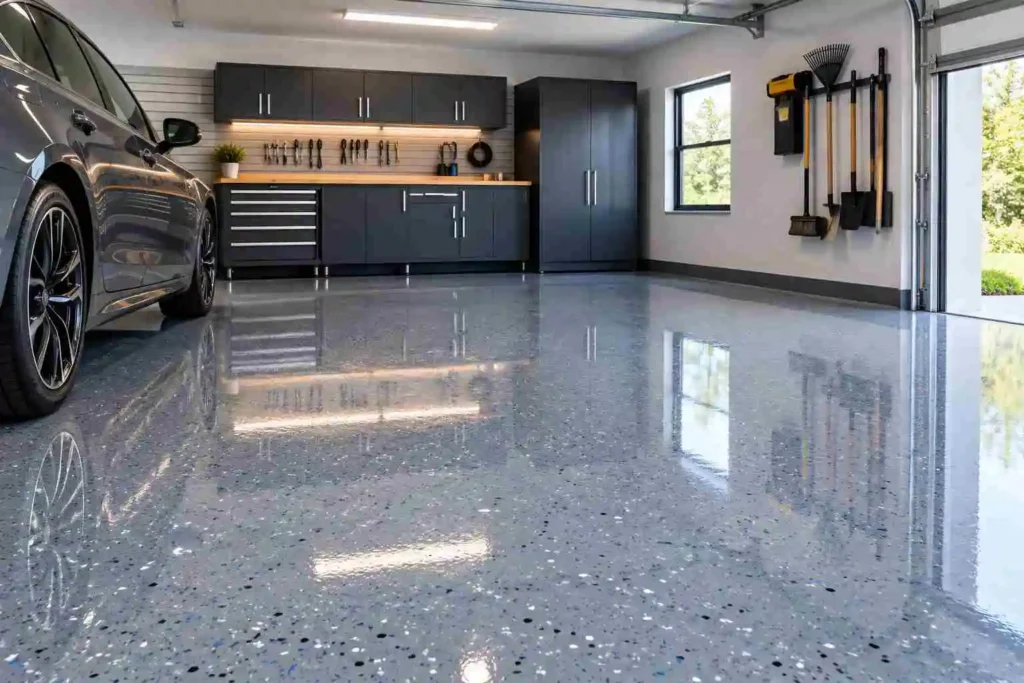
A garage floor deals with much more than everyday foot traffic. Cars bring in dirt and moisture, tyres create constant wear and oil, grease and automotive fluids can leave stubborn stains on bare concrete. Over time, an unfinished garage floor can become dusty, marked and difficult to keep clean.
A commercial epoxy floor covering for garage spaces can provide a hard-wearing, easy-to-clean surface while giving an ordinary concrete floor a more finished appearance. But choosing the right coating is only part of the job. Proper concrete preparation, moisture control and correct application all affect the final result. For homeowners and businesses in Adelaide, understanding these factors can help you choose an epoxy garage floor that suits the way your space is actually used.
What Is Commercial Epoxy Floor Covering For A Garage?
Commercial epoxy flooring is a resin-based coating system designed to be applied over properly prepared concrete. Epoxy resin is combined with a hardener, and the mixture cures to form a hard protective surface. Unlike basic garage floor paint, a commercial-grade epoxy system can be built around the conditions of the space, including vehicle traffic, chemical exposure, appearance and slip-resistance requirements.
Depending on the system, a garage floor may include a primer, epoxy base coat, decorative flakes or aggregate, and a protective topcoat. The important point is that epoxy should not simply be treated like ordinary paint. The concrete underneath needs to be suitable and properly prepared before the coating is installed.
Why Choose Epoxy Garage Flooring?
A properly selected and installed epoxy floor can offer several practical advantages.
Easier Cleaning
Bare concrete is porous and can hold dirt, oil and other contaminants. A sealed epoxy surface is easier to sweep, mop and clean after everyday garage use. Epoxy garage flooring is also commonly selected for its resistance to stains and spills such as motor oil and lubricants.
Protection For Concrete
A suitable floor coating can create a protective surface over concrete, helping reduce direct exposure to everyday wear, dirt and spills.
A More Finished Appearance
Garage epoxy flooring is available in different colours and finishes. Decorative flakes can add texture and visual interest, while solid-colour systems can create a cleaner commercial appearance.
Suitable For Different Traffic Levels
Not every garage has the same demands. A private residential garage, automotive workshop and commercial vehicle area may require different flooring specifications. The coating should therefore be selected according to traffic, use and exposure rather than appearance alone.
How To Choose The Right Commercial Garage Floor Coating
Before selecting an epoxy system, consider how the garage will be used. First, think about vehicle and foot traffic. A busy workshop may need a more robust flooring system than a garage used mainly for parking. Next, consider exposure to oil, grease, automotive fluids and cleaning chemicals. Product specifications should be checked to make sure the selected system is suitable for the substances it may encounter.
You should also consider the desired finish. Options can include:
- Solid-colour epoxy
- Decorative flake flooring
- Textured finishes
- Anti-slip flooring systems
- Gloss or lower-sheen finishes
For areas where water or spills may create a slipping risk, an appropriate anti-slip aggregate or textured finish can be incorporated into the flooring system.
Preparing A Concrete Garage Floor For Epoxy
This is one of the most important parts of the entire project.
Even a high-quality epoxy product can perform poorly if it is applied over dirty, weak, contaminated or unsuitable concrete. Professional epoxy flooring processes commonly include inspection, cleaning, mechanical preparation, repairs and moisture assessment before coating.
1. Inspect The Concrete
Look for cracks, holes, surface damage, previous coatings, loose concrete and other imperfections. Significant defects should be addressed before the coating is applied. Epoxy is a floor covering; it is not a replacement for repairing seriously damaged concrete.
2. Remove Oil And Grease
Oil contamination can interfere with adhesion. The garage floor should be thoroughly cleaned and degreased, with particular attention given to areas around vehicles and workshop equipment. Australian DIY guidance also recommends thorough degreasing and cleaning before epoxy application.
3. Profile The Concrete
The concrete surface needs an appropriate texture so the coating can bond effectively. Depending on the floor and coating system, preparation may involve diamond grinding, shot blasting or another mechanical method. Grinding is widely used for removing contaminants, old coatings and weak surface material while creating a suitable profile for the new floor system.
4. Check For Moisture
Moisture is another important consideration. A coating should not simply be applied over a concrete slab with unresolved moisture problems. The correct moisture assessment method depends on the flooring system and manufacturer requirements. If excessive moisture is identified, professional advice may be needed before proceeding.
Commercial Epoxy Garage Floor Installation Process
Although the exact process varies between products, a professional installation commonly follows this general sequence:
- Inspect the concrete and garage conditions.
- Remove dirt, oil and other contaminants.
- Repair cracks, holes and surface defects where required.
- Mechanically prepare the concrete.
- Remove preparation dust and leave the surface ready for coating.
- Apply the appropriate primer or base coat.
- Install the epoxy coating system.
- Add decorative flakes or anti-slip aggregate if specified.
- Apply the required protective topcoat.
- Allow the floor to cure according to the manufacturer’s requirements.
The installation environment also matters. Temperature, humidity, substrate condition and product working time can affect application and curing, so manufacturer instructions should always be followed.
How To Protect And Maintain An Epoxy Garage Floor
Once your epoxy garage flooring has cured, regular maintenance is relatively straightforward. Sweep or vacuum loose dirt regularly so grit does not remain under vehicle tyres or get dragged across the surface. Clean oil and other spills promptly rather than allowing them to remain on the floor for long periods. Use cleaning products recommended for the particular flooring system, and avoid dragging sharp or extremely heavy objects across the surface.
It is also worth inspecting the floor from time to time. Small areas of damage can be easier to address before they develop into a larger coating problem.
Common Problems With Epoxy Garage Flooring
Several problems can develop when an epoxy system is installed over an unsuitable or poorly prepared surface.
Peeling Or Delamination
This can be associated with contamination, inadequate preparation, moisture or compatibility issues.
Bubbling Or Blistering
Moisture beneath a coating can contribute to blistering or other coating failures, which is why moisture assessment matters before installation.
Cracking
Epoxy cannot eliminate movement or structural problems in the concrete beneath it. Existing cracks should be assessed and treated appropriately before coating.
Uneven Finish
Poor preparation, application conditions or incorrect product handling can affect the appearance and consistency of the finished surface.
Is Commercial Epoxy Floor Covering Right For Your Garage?
Commercial epoxy flooring can be a practical option when you want a garage floor that looks cleaner, is easier to maintain and is designed around the demands of vehicle and workshop use. However, the right system depends on the condition of the concrete, traffic level, chemical exposure, moisture conditions and desired finish. A professional assessment can help determine whether epoxy is suitable and what preparation the floor requires.
Commercial Epoxy Flooring For Garages In Adelaide
If you’re considering commercial epoxy floor covering for garage spaces in Adelaide, Aussie Painters SA can help you assess the condition of your floor and determine the right approach for your project. From concrete preparation and surface repairs to epoxy application and finishing, proper planning can make a major difference to the appearance and performance of your garage floor.
Ready to improve your garage floor? Contact Aussie Painters SA for a professional assessment and quote in Adelaide.