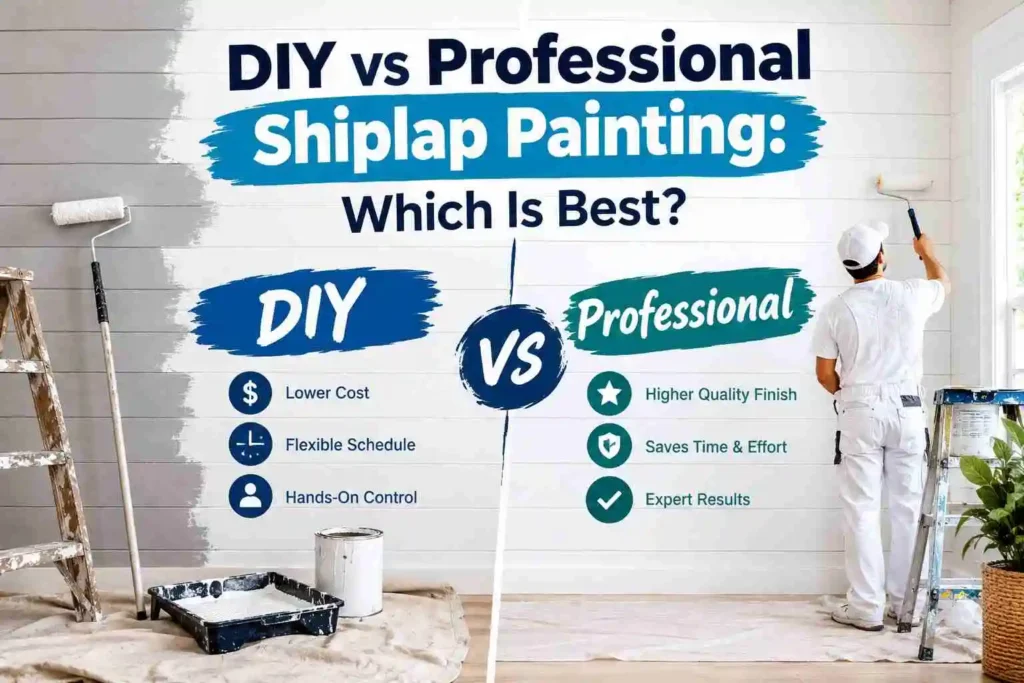
Shiplap walls can make a room feel warmer, brighter and more inviting. Whether you want a clean white finish in your living room or a soft neutral colour in your bedroom, painting shiplap is an effective way to refresh your interior without replacing the existing boards.
However, achieving a beautiful finish takes more than choosing the right colour. The grooves, edges, surface condition and type of material all affect the final result. Should you paint your shiplap yourself or hire professional painters? Both options have advantages, depending on your budget, skills and expectations. In this guide, we compare DIY and professional shiplap painting, explain the costs and challenges and share practical advice to help you make an informed decision.
What Makes Shiplap Painting Different?
Shiplap consists of boards fitted together to create distinctive horizontal or vertical lines across a wall. These details add character, but they also make painting more challenging than painting a flat surface. The grooves can collect excess paint, while raised edges may show uneven coverage or brush marks. Proper preparation is equally important because paint may not adhere well to dusty, glossy or damaged surfaces.
The material also matters. Bare timber, MDF panelling, pre-primed boards and previously painted shiplap may require different preparation methods and primers. Understanding the surface before starting helps you avoid common painting problems.
DIY Shiplap Painting: Benefits And Drawbacks
Why Choose DIY Painting?
The main advantage of DIY shiplap painting is saving on labour costs. If you already own basic painting tools and want to refresh a small feature wall, completing the work yourself can be an affordable option. DIY painting also gives you complete control over the process. You can choose the colour, work around your schedule and make adjustments whenever needed. For homeowners who enjoy practical projects, painting a small shiplap wall can be a satisfying weekend task.
What Are the Challenges?
Painting shiplap requires patience, particularly when covering narrow grooves and corners. A roller may miss recessed areas, while using too much paint on a brush can leave drips and uneven patches. Preparation also takes time. Cleaning, repairing small imperfections, sanding where appropriate and applying primer can take longer than expected. You must also protect nearby furniture, flooring and trims. Mistakes can increase the overall cost if you need extra paint or have to correct an uneven finish. DIY is generally most suitable for small, accessible walls in good condition when you have enough time to work carefully.
Professional Shiplap Painting: Is It Worth The Cost?
Hiring professional residential or commercial painters can be a practical choice when you want a consistent finish without managing every stage yourself.
The Benefits of Professional Painting
Experienced painters understand how to prepare different surfaces, choose suitable products and apply paint evenly. They can identify areas that need repairs or additional preparation before painting begins. Their experience with grooves, edges and joins can also help reduce paint build-up and visible brush marks. For larger walls or multiple rooms, professional painting saves considerable time and effort.
Another advantage is product selection. The right primer and topcoat depend on the existing surface and its condition. Professional advice can help prevent problems caused by unsuitable products or poor preparation. However, professional painting costs more upfront, and results depend on the quality of the workmanship. Always check what a quote includes before making your decision.
DIY vs Professional Shiplap Painting: A Comparison
Factor | DIY painting | Professional painting |
Cost | Usually lower labour costs | Includes professional labour |
Time | Requires your own time | Less hands-on work for you |
Preparation | You handle every step | Can be included in the quote |
Finish | Depends on your skills | Experience can improve consistency |
Equipment | Must be purchased or borrowed | Usually supplied by the painter |
Best for | Small, straightforward walls | Large or demanding projects |
Neither option is automatically better. Your choice should depend on the wall’s condition, your budget, available time and desired finish.
How Much Does Shiplap Painting Cost?
The cost depends on the wall’s size, material, existing coating, accessibility and amount of preparation required. For DIY painting, budget for primer where necessary, paint, brushes, rollers, cleaning supplies, sandpaper, filler and protective materials. If you need to purchase equipment specifically for the project, include those expenses too.
Professional quotes should clearly explain whether cleaning, repairs, priming, finish coats and clean-up are included. A lower quote may exclude preparation or additional work, so comparing the total scope is more useful than comparing prices alone. Consider the value of your time as well. DIY may be economical for one small wall, while professional painting may be more practical for extensive panelling or several rooms.
How To Achieve A Better Shiplap Paint Finish
Whether you paint the wall yourself or hire a professional, preparation is essential.
- Clean the boards. Remove dust, grease and dirt with a suitable cleaner. Allow the surface to dry completely.
- Repair imperfections. Fill appropriate nail holes and minor defects, then sand repaired areas smooth once dry.
- Prepare the existing finish. Glossy coatings may require light sanding or a suitable adhesion primer. Remove sanding dust before painting.
- Apply primer when needed. Bare timber, certain MDF products and stained surfaces may require specific primers. Follow the manufacturer’s recommendations.
- Paint the grooves first. Use a suitable brush and avoid leaving excess paint in recessed areas. Work in manageable sections.
- Finish the wider surfaces. Use an appropriate roller or brush to apply paint evenly. Allow each coat to dry according to the product instructions before applying another.
When Should You Hire Professional Painters?
DIY painting may be suitable for a small feature wall, but professional help is worth considering if the boards are damaged, the existing paint is peeling, or the project involves high ceilings and difficult access. It is also worth seeking advice when changing from a dark colour to a light one, as the existing coating may require additional preparation or coats.
For homeowners planning interior house painting in Adelaide, assessing the wall material and existing finish before starting can help avoid unnecessary costs and disappointing results.
Which Option Is Best For Your Home?
DIY shiplap painting is a good choice if you want to save on labour, have a manageable project and feel confident preparing the surface. Professional painting is often more convenient for larger walls, detailed finishes and surfaces that require extensive preparation.
At Aussie Painters SA, we understand that a successful paint job starts with the right preparation and suitable products. If you are ready to refresh your shiplap walls or update your home’s interior, contact Aussie Painters SA to discuss your project and request a quote.