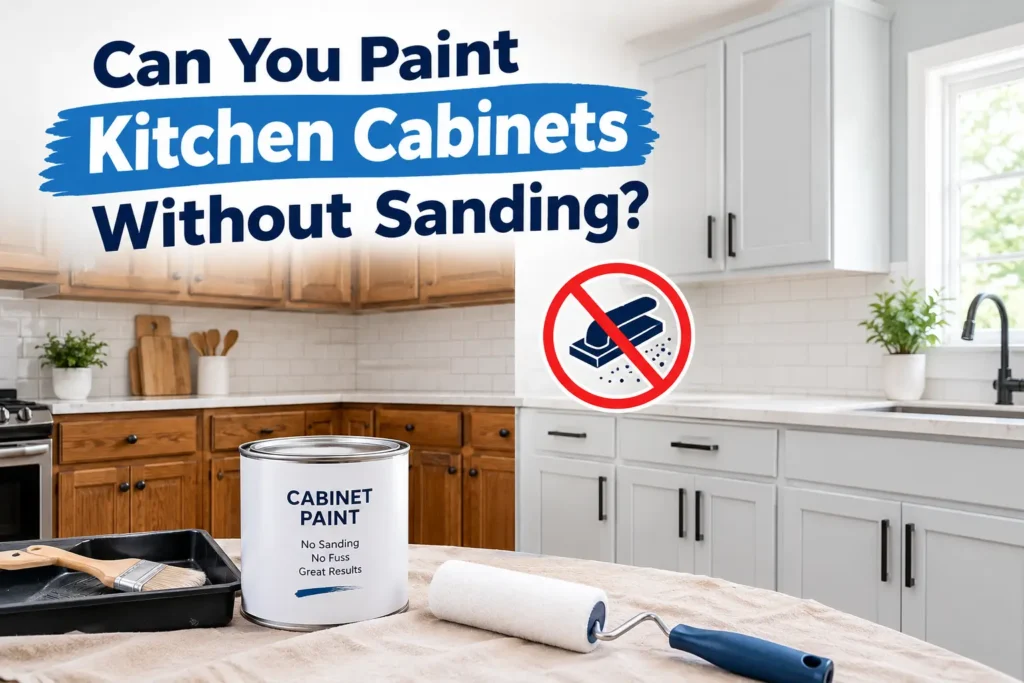
Painting kitchen cabinets is a popular way to update an outdated kitchen without the expense of replacing the entire cabinetry. However, sanding can be messy, time-consuming and difficult to manage when you have multiple cupboard doors and drawers. This leads many homeowners to ask: can you paint cabinets without sanding and still achieve a smooth, durable finish?
Yes, you can paint cabinets without extensive sanding in some situations, but the right preparation is essential. The result depends on the cabinet material, the condition of its existing finish and the paint system you use. Understanding these factors before starting can help you avoid peeling paint, visible brush marks and unnecessary rework.
Is Epoxy Paint Suitable For A Garage Floor?
A garage floor needs to handle more abuse than many other painted surfaces. Cars bring in water, dirt and road contaminants, while tools, chemicals, oil and heavy equipment can place additional stress on the concrete. Epoxy is a resin-based coating system designed for properly prepared concrete. Depending on the product and system, it can provide a durable, stain-resistant and relatively easy-to-clean finish. Some systems also incorporate decorative flakes and anti-slip additives for additional texture and appearance.
However, epoxy cannot compensate for a weak or contaminated concrete surface. The preparation underneath the coating is one of the biggest factors in the finished result.
Is It Possible To Paint Cabinets Without Sanding?
You can often paint cabinets without sanding when the existing coating is firmly attached, the surface is clean and a compatible primer is available. Some bonding primers are specifically designed to adhere to glossy paint, laminate and other difficult surfaces.
However, ordinary wall paint applied directly to a glossy cabinet is unlikely to provide the same durability as a properly prepared cabinet coating. Kitchen cabinets experience frequent handling, splashes, grease and regular cleaning, so adhesion matters. Skipping sanding also does not mean skipping surface preparation. Dirt, oil, wax and loose paint must be addressed before applying any new coating. Always check the primer manufacturer’s instructions to confirm whether sanding is optional for your particular surface.
Which Cabinet Materials Can Be Painted Without Sanding?
Timber Cabinets
Solid timber cabinets with a sound existing finish may need only thorough cleaning and a suitable bonding primer. However, bare timber, peeling paint, damaged varnish and rough patches usually require additional preparation. Timber can also contain knots, stains or natural oils that affect the final finish. Depending on the wood and existing coating, a suitable stain-blocking primer may be necessary to prevent discolouration from showing through the new paint.
Mdf Cabinets
Medium-density fibreboard (MDF) is commonly used for cabinet doors and panels. If the MDF has a stable, previously painted surface, repainting without extensive sanding may be possible. Exposed MDF edges require particular care because they can absorb moisture and develop a rough appearance. Swollen or crumbling boards should be repaired or replaced rather than covered with paint.
Laminate And Melamine Cabinets
Laminate and melamine cabinets are among the most challenging surfaces to repaint because their factory finishes can be smooth and non-porous. Ordinary paint may not bond reliably without a suitable adhesion primer. Choose a product specifically approved for the surface, follow its preparation instructions and test a small hidden area first. If the laminate is lifting, cracked or separating from the substrate, repair or replacement may be more appropriate than painting.
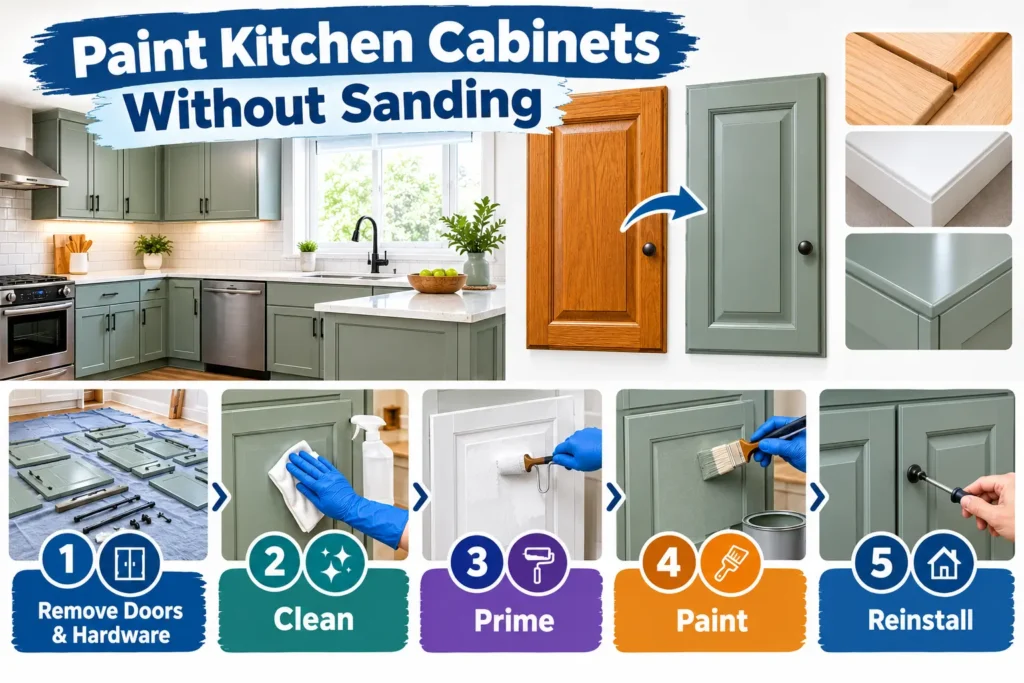
How To Paint Cabinets Without Sanding
Following a careful process can improve the appearance and durability of your finished cabinets.
Step 1: Remove Cabinet Doors And Hardware
Remove handles, hinges where practical, and cabinet doors and drawer fronts. Label each door and its corresponding position so reassembly is straightforward. Lay the components on a clean, protected surface where you can work comfortably. Painting doors separately also makes it easier to reach corners, edges and recessed panels without leaving heavy paint build-up around the hardware.
Step 2: Clean Away Grease And Residue
Kitchen cabinets collect cooking oils, fingerprints and cleaning-product residue, particularly near the stove and frequently used handles. Even a surface that looks clean may contain contaminants that prevent paint from adhering. Use a suitable degreaser or the cleaner recommended by the coating manufacturer. Rinse where required and allow the surfaces to dry completely before continuing. Pay particular attention to cabinet doors near cooking areas.
Step 3: Check Whether Sanding Is Necessary
Inspect the existing finish for peeling, bubbling, scratches and loose edges. If the coating is sound and the selected primer permits application without sanding, extensive sanding may not be necessary. If the surface is damaged or uneven, remove loose material and prepare it according to the product instructions. Do not disturb potentially lead-containing paint in older homes without appropriate assessment and precautions.
Step 4: Apply A Compatible Primer
Choose a bonding primer designed for your cabinet material and existing finish. Apply it evenly, following the recommended coverage, drying time and ventilation requirements. A primer helps create a suitable surface for the topcoat, but it cannot compensate for grease, moisture or a failing underlying coating. If the test area peels or scratches easily after the recommended curing period, reassess the preparation and product compatibility.
Step 5: Apply Cabinet Paint In Thin Coats
Use a durable cabinet or trim paint that is compatible with the primer. A suitable brush can help with corners and detailed panels, while a quality small roller may provide an even finish across flatter surfaces. Apply thin, consistent coats rather than trying to cover everything in one pass. Allow each coat to dry for the specified time and avoid reinstalling the doors or cleaning the surfaces before the paint has cured sufficiently.
Common Mistakes That Can Ruin the Finish
Several mistakes can make a cabinet painting project look unfinished or cause the coating to fail prematurely.
- Painting over grease: Contaminants interfere with adhesion, even when the paint itself is good quality.
- Using the wrong primer: A primer suitable for timber may not be appropriate for laminate or melamine.
- Ignoring surface damage: Paint will not fix swollen MDF, lifting laminate or loose existing coatings.
- Applying thick coats: Excess paint can create drips, uneven coverage and longer drying times.
- Using cabinets too soon: Paint that feels dry may still be soft underneath and vulnerable to scratches or sticking.
Taking time to prepare the surface and follow the product instructions is usually more valuable than rushing to finish the job in a single day.
Should You Paint Cabinets Yourself Or Hire A Professional?
A DIY approach may work well for a small project involving cabinets in good condition. However, extensive cabinetry, damaged surfaces, complicated finishes and high-visibility kitchen doors can make the job more demanding. Professional painters can assess the existing finish, identify preparation requirements and select compatible products. They can also help achieve a consistent appearance across doors, drawers and fixed cabinet frames.
If you are planning a broader home makeover, experienced House Painters Adelaide can advise you on suitable finishes and preparation methods for your property. Although cabinet painting differs from wall painting, the same principle applies: the final result depends heavily on the condition of the surface and the quality of the preparation.