


Roof Repainting Adelaide: Signs Your Roof Needs Repainting
9 common signs a roof in Adelaide needs repainting include fading, cracks, moss growth, and water damage, and the article highlights that repainting restores protection, improves durability, and helps prevent costly structural issues.
A roof is one of the most exposed parts of any home, and in Adelaide it works under constant pressure. Strong UV radiation, dry heat, sudden rain, and coastal air in some suburbs all contribute to slow surface breakdown. Most roofs don’t fail suddenly—they degrade gradually. The coating weakens, the surface becomes less protective, and small warning signs start to appear long before serious damage is visible. Understanding these signs is important because repainting is not just about looks. It is about restoring protection, improving durability, and extending the life of the roof before costly repairs are needed.
1. Fading and Weathered Appearance
Fading is usually the first sign homeowners notice. In Adelaide’s strong sunlight, roof coatings lose their strength faster than expected, especially on north-facing sections that receive constant UV exposure. Over time, tiles start to look dull, patchy, or uneven in color. This fading is more than a visual issue. It shows that the protective coating is breaking down. Once this layer weakens, the roof becomes more vulnerable to heat absorption and moisture damage. Repainting restores both appearance and surface protection, especially in older suburbs where homes have long been exposed to harsh seasonal cycles.
2. Chalky Or Dusty Roof Surface
If the roof surface feels dusty or leaves a powdery residue when touched, it is a sign of coating breakdown. This is known as chalking. Chalking means the paint is no longer binding properly to the surface. The protective layer is slowly disintegrating, leaving the roof exposed to weather conditions. This is a clear indication that repainting is needed to restore proper sealing and protection.
3. Water Behavior After Rain Changes
A properly coated roof should shed water quickly. But when repainting is needed, water starts behaving differently. It may sit in patches, spread unevenly, or leave dark damp marks that take time to dry. This is especially noticeable in terracotta roofs, which are common in inner Adelaide suburbs. Terracotta is naturally durable, but once its protective coating weakens, it loses water resistance over time. This stage often leads to hidden moisture absorption, which can affect roof structure if ignored.
4. Moss, Algae, And Biological Growth
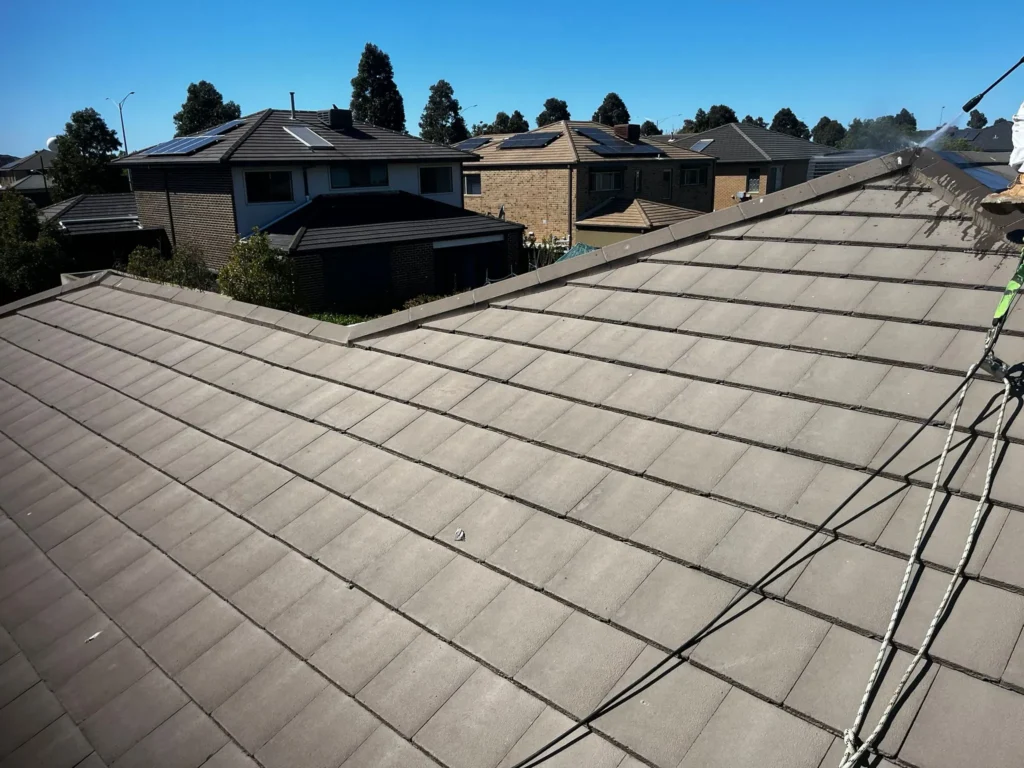
Moss, algae, and other surface growth are clear warning signs that a roof is losing its protective strength. You may notice green moss forming in shaded areas, black algae slowly spreading across roof sections, or lichen developing between roof tiles. In many cases, damp areas remain wet for longer periods, stains return even after cleaning, and growth becomes concentrated in low sunlight zones where moisture stays trapped. In Adelaide’s mixed climate conditions, this type of biological growth is very common on aging roofs. When the protective coating starts to weaken, the surface retains moisture for longer periods, creating the ideal environment for moss and algae to develop. This is not simply a cleaning problem—it is a strong indication that the roof coating is no longer performing effectively and repainting is needed to restore proper protection.
5. Small Cracks And Surface Stress Lines
Roof materials expand and contract daily due to temperature changes, especially during Adelaide’s hot summers and cooler winters. Over time, this movement creates small cracks in the surface coating.
This is often seen in older cement and concrete tile roofs. When the coating loses flexibility, it cannot handle thermal movement properly, leading to surface cracks. These cracks allow moisture to slowly enter the roof structure, making repainting an important preventive step.
6. Uneven Roof Color
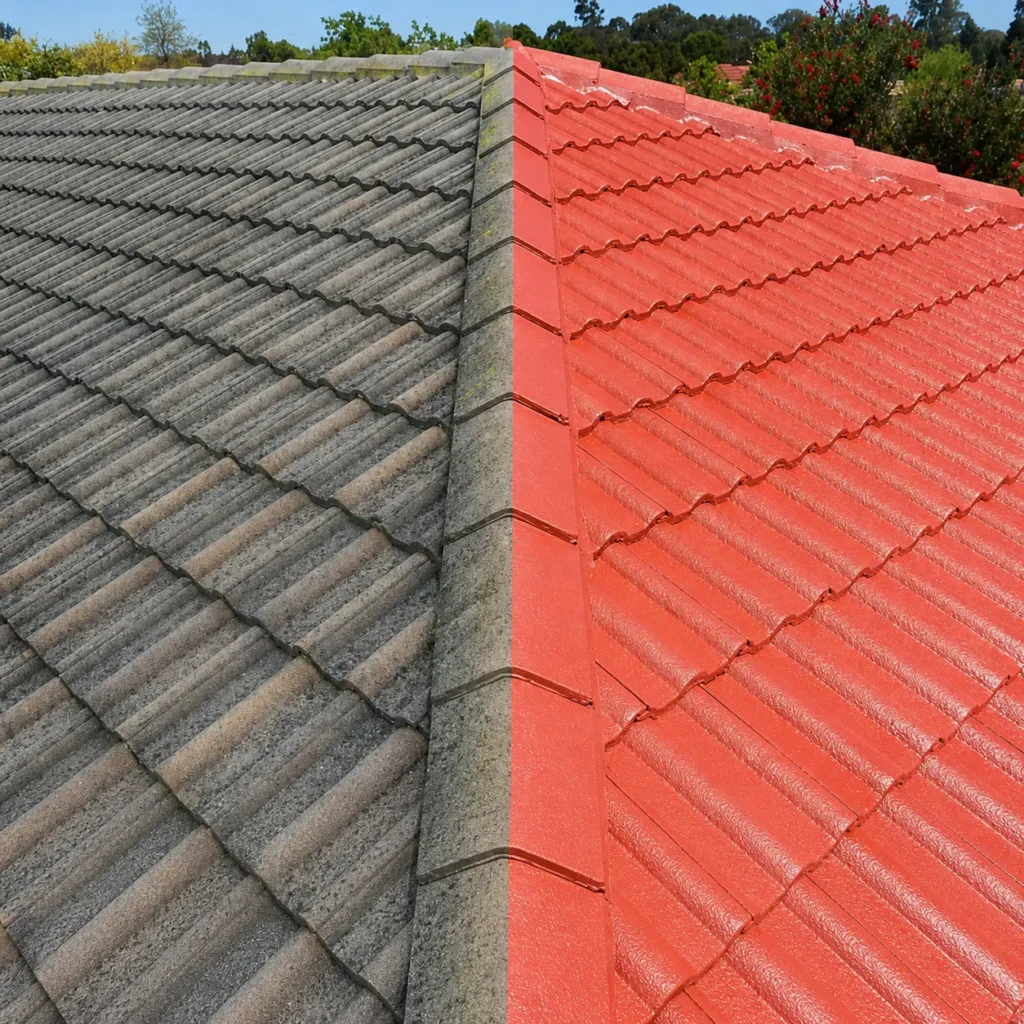
Another common but often overlooked sign is uneven colour across the roof surface. Some areas may look newer, brighter, or cleaner, while other sections appear faded, dull, or heavily weathered. This usually happens because different parts of the roof receive different levels of sunlight, wind exposure, and rain drainage over time. In Adelaide homes, this is especially noticeable where one side of the roof faces direct sun while the other remains partially shaded. As the coating breaks down unevenly, the roof loses its uniform protection. This patchy appearance is a clear indication that the surface coating is no longer performing consistently and repainting is needed to restore even coverage and protection.
7. Rising Heat Indoors
A weakening roof coating can also affect the comfort inside your home. When the protective layer starts to fail, the roof absorbs more heat instead of reflecting it. This leads to noticeably warmer indoor temperatures, especially during Adelaide’s hot summer months. Homeowners may find that rooms under the roof become harder to cool, even when air conditioning is running. This is often linked to aging, painting roof tiles or deteriorated surface coatings that no longer provide thermal protection. Over time, this reduced efficiency can increase energy usage and cooling costs. Repainting helps restore reflective properties, improving both roof performance and indoor comfort by reducing heat absorption.
8. Roof Looks Old Even After Cleaning
Sometimes a roof is cleaned but still looks aged or dull. This is because the issue is not dirt—it is coating deterioration. Cleaning removes surface debris, but it cannot restore faded or broken protective layers. If the roof still looks worn after cleaning, it is a strong sign that repainting is required to bring it back to a healthy condition.
9. Roof Leaks or Water Damage
Roof leaks or signs of water damage are one of the most serious indicators that your roof coating is no longer performing properly. You may notice water stains on ceilings, damp patches on internal walls, or small drips during heavy rain. These issues often start slowly, where tiny cracks or weak points in the roof surface allow moisture to enter over time. In Adelaide’s changing weather conditions, repeated cycles of heat and rain can make this problem worse. When the protective layer of paint on roof tiles starts to fail, water finds its way through the surface more easily. At this stage, repainting is not just about appearance—it becomes an important step to help protect the structure and prevent further internal damage.
Book Your Professional Roof Repainting in Adelaide Today for Long-Lasting Protection
Roof condition is strongly influenced by material type, age, and local environment. In Adelaide, where weather conditions can shift between intense heat, coastal air, and seasonal rain, roof coatings naturally degrade over time. Signs like fading, chalking, moss growth, cracks, and uneven water behavior all indicate that the protective layer is weakening.
Understanding these signs early helps prevent expensive structural issues and extends roof life significantly.
For professional roof inspection high-quality roof painting or repainting services across Adelaide suburbs, contact Aussie Painters SA to keep your roof protected, durable, and looking its best for years to come.


